

ADAM-4011
Analog input modules use a microprocessor-controlled integrating A/D converter to convert sensor voltage, current, thermocouple, or RTD signals into digital data. The digital data is then translated into either engineering units, twos complement hexadecimal format or percentage of full-scale range (FSR)according to the module ’s configuration. When prompted by the host computer, the data is sent through a standard RS-485 interface. The Analog Input Modules offer signal conditioning, A/D…
Downloads
Features
- Input type: Thermocouple, mV, V or mA
- Isolation voltage: 3000 VDC
- Watchdog Timer
Related Products

ADAM-4012
Analog input modules use a microprocessor-controlled integrating A/D converter to convert sensor voltage, or current signals into digital data. The digital…
View details →
ADAM-4013
Analog input modules use a microprocessor-controlled integrating A/D converter to convert sensor voltage, current, or RTD signals into digital data. The…
View details →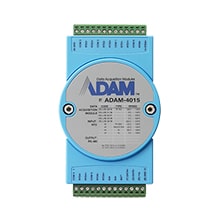
ADAM-4015
A RTD module is popular for temperature measurement. Unlike tranditional designs, the ADAM-4015 provides six RTD input channels for different types of RTD…
View details →
ADAM-4017
The ADAM-4017 is a 16-bit, 8-channel analog input module that provides programmable input ranges on all channels. This module is an extremely cost-effective…
View details →
ADAM-4017+
The ADAM-4017+ is a 16-bit, 8-channel analog input module that provides programmable input ranges on all channels. These modules are an extremely…
View details →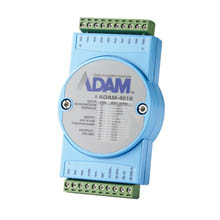
ADAM-4018
The ADAM-4017/4018 is a 16-bit,8-channel analog input module that provides programmable input ranges on all channels. This module is an extremely…
View details →
ADAM-4018+
The ADAM-4018+ is a 16-bit, 8-channel analog input module that provides programmable input ranges on all channels. These modules are an extremely…
View details →
ADAM-4019+
ADAM-4019+ is an 8-channel Universal Analog Input Module. The new module improves over its predecessor ADAM-4019 with a 4~20 mA input range, and a burnout…
View details →