
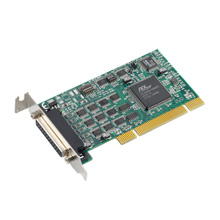
PCI-1757U
PCI-1757UP is a 24-channel digital I/O low profile PCI card that meets the PCI standard REV.2.2 (universal PCI expansion card). The card also works with 3.3 V and 5 V PCI slots, and provides you with 24 parallel digital input/output channels that emulate mode 0 of the 8255 PPI chip. However, the buffered circuits offer a higher driving capability than the 8255.
Downloads
Features
- Low profile PCI form factor
- Universal PCI bus
- 24 TTL level digital I/O channels
- Emulates mode 0 of 8255 PPI
- Buffered circuits provide higher driving capability
- Interrupt handling capability
- Output status read-back
- I/O configurable by software or on board DIP switch
- Keeps the output settings and values after system hot reset
- BoardID™ switch
- Convenient DB25 connector
- Supports both dry and wet contact
Related Products

PCI-1730
PCIE-1730 offers isolated digital input channels as well as isolated digital output channels with isolation protection up to 2,500 VDC, which makes them ideal…
View details →
PCI-1730U
PCI-1730U, PCI-1733, and PCI-1734 offer isolated digital input channels as well as isolated digital output channels with isolation protection up to 2,500 VDC,…
View details →
PCI-1733
PCI-1730U, PCI-1733, and PCI-1734 offer isolated digital input channels as well as isolated digital output channels with isolation protection up to 2,500 VDC,…
View details →
PCI-1734
PCI-1734 offer isolated digital input channels as well as isolated digital output channels with isolation protection up to 2,500 VDC, which makes them ideal…
View details →
PCI-1735U
The PCI-1735U digital I/O and counter card is PC-compatible add-on card with 32 digital input channels, 32 digital output channels and three programmable…
View details →
PCI-1737U
24-ch Digital I/O Universal PCI Card
View details →
PCI-1739U
48-ch Digital I/O Universal PCI Card
View details →
PCI-1750
PCI-1750 offers 16 isolated digital input channels, 16 isolated digital output channels, and one isolated counter/timer for the PCI bus. With isolation…
View details →